I have been thinking a lot about mental health and creativity.
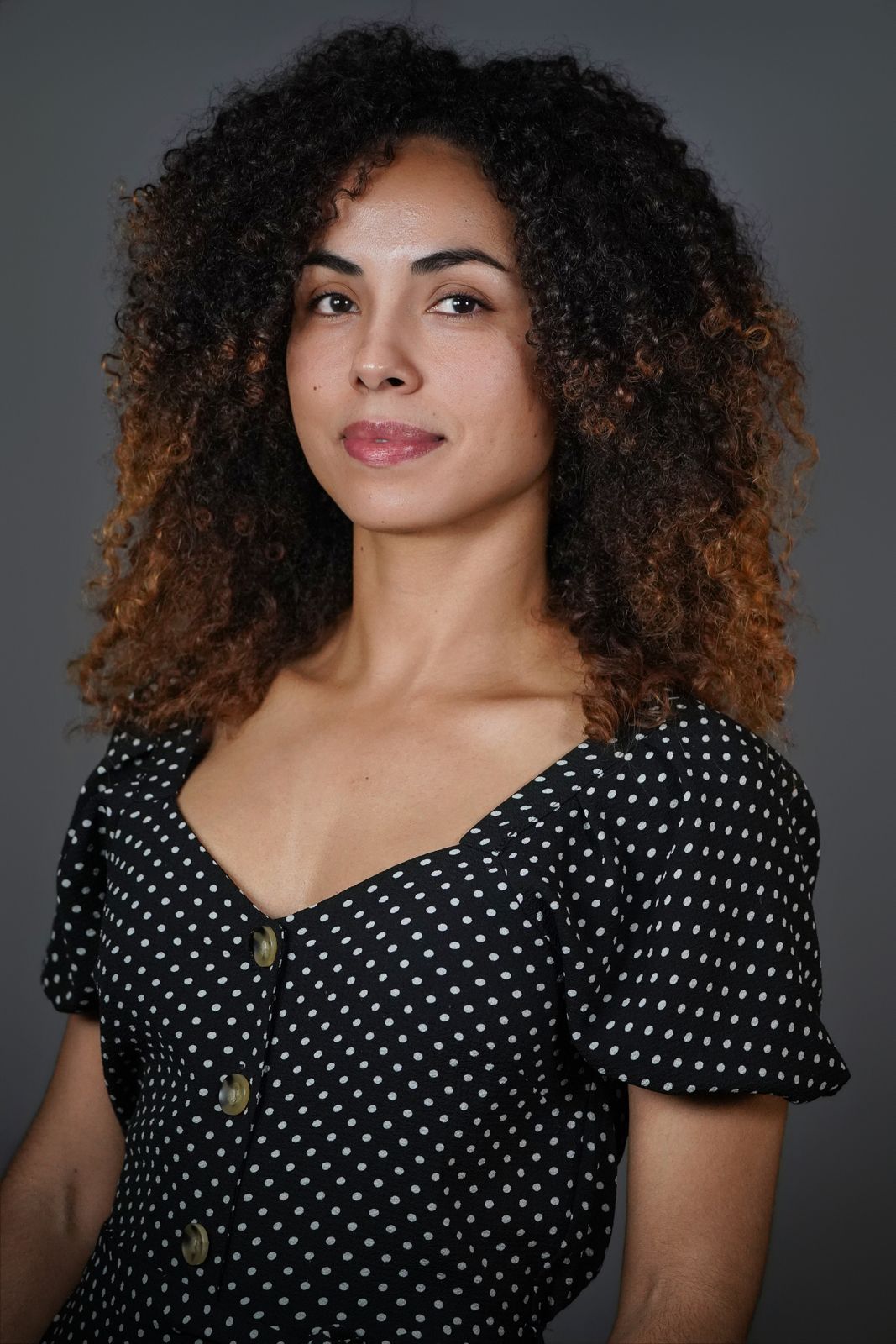
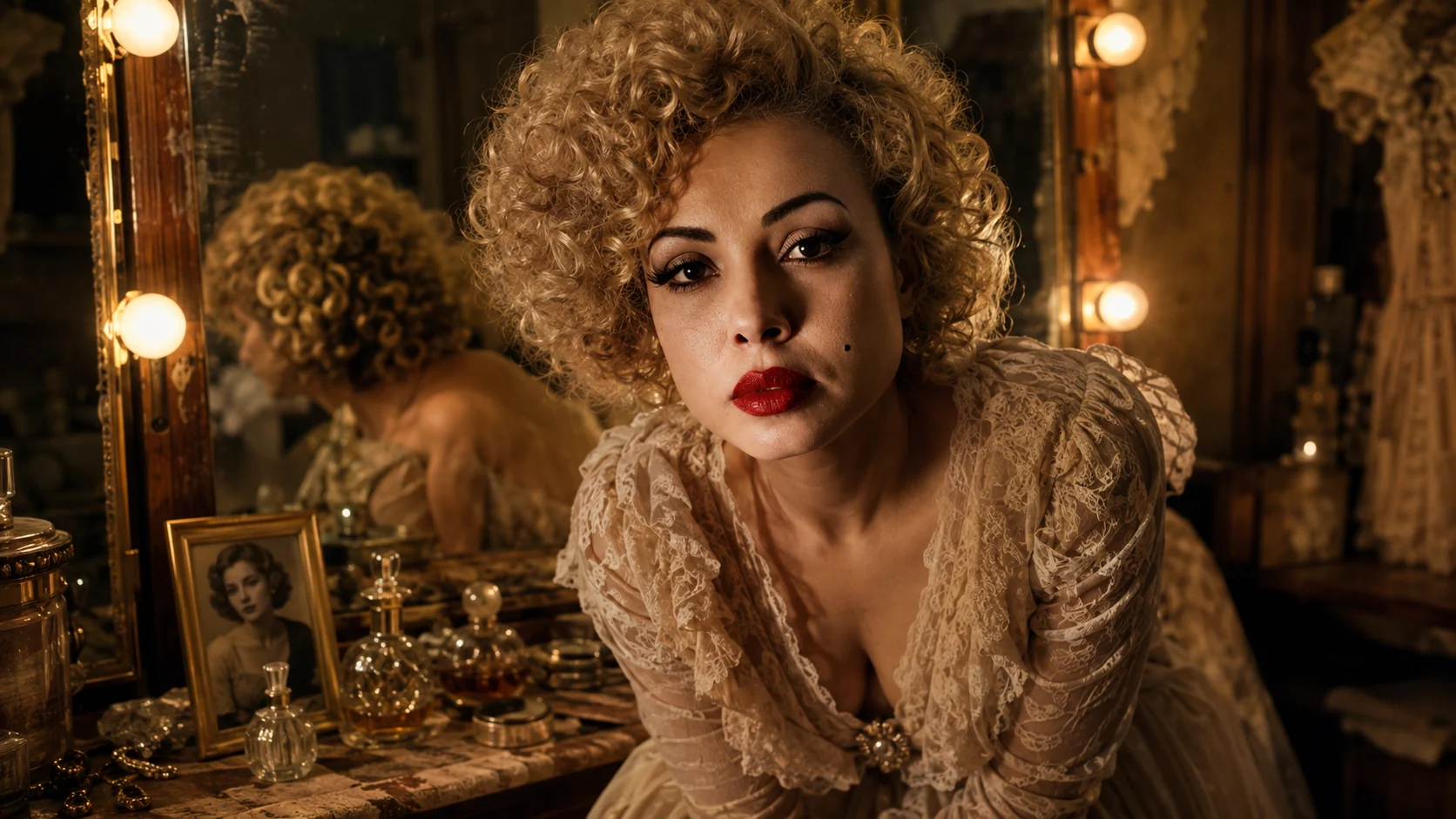
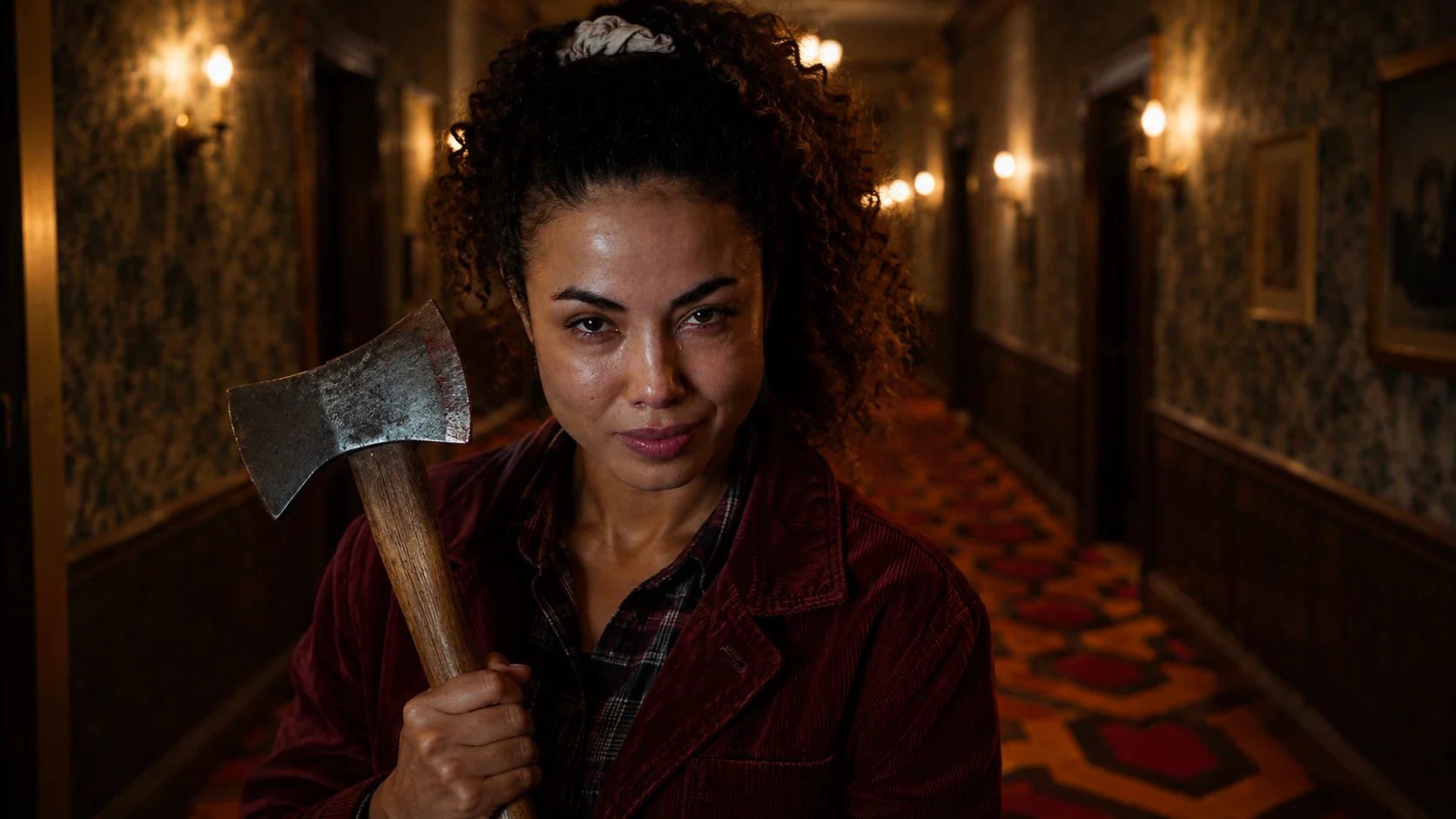
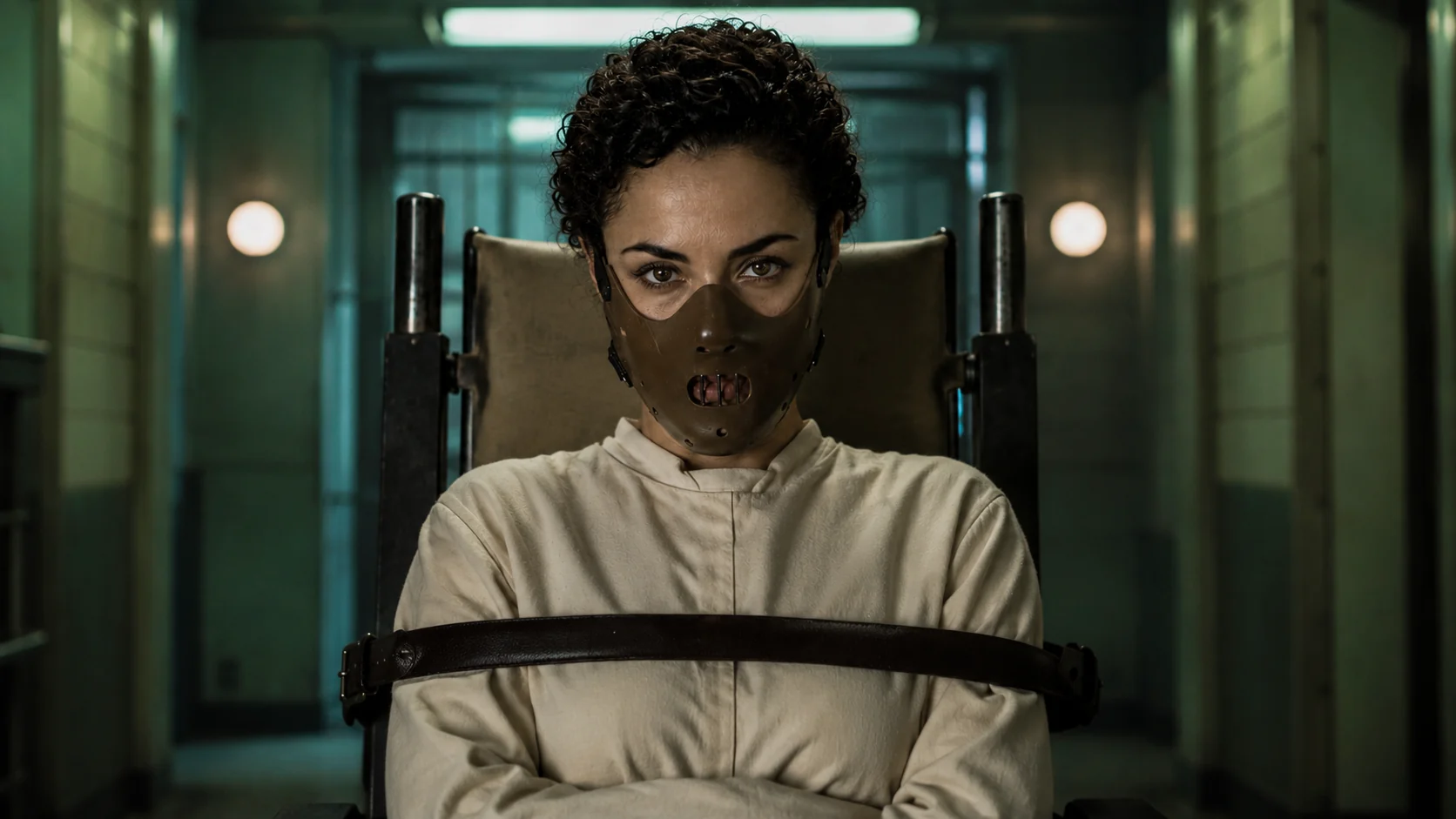
I am an actress. Perhaps that is why this question interests me in such a particular way: in acting, the things we use to work — perception, imagination, memory, body and emotion — cannot be completely separated from who we are.
I have also been thinking about a very old relationship: the relationship between art and pain.
The history of art is full of works born from grief, loss, betrayal, loneliness, violence, injustice, heartbreak and experiences that, at one point, seemed impossible to endure. It would be absurd to deny that.
One of art’s extraordinary capacities may be precisely this: to transform experience into language, chaos into form, and something that belongs to one person into something another person can recognise.
Pain can become material for art.
But that is very different from saying that suffering is necessary for creativity to exist.
There is an important difference between recognising that someone can create from pain and believing that they need to remain in pain in order to keep creating.
The first is transformation.
The second is mythology.
That is precisely the boundary I want to investigate.
I want to understand whether some of the characteristics that help a person create — noticing nuance, making unexpected associations, imagining intensely, remaining deeply connected to emotion, questioning what appears established — can, under certain circumstances, also have a shadow side.
I call these characteristics superpowers. It is not a medical term or a scientific term. It is a metaphor.
But perhaps it is a useful one.
Because a superpower does not necessarily have to be an advantage in every situation.
Perhaps the quality that allows an actress to enter deeply into another person’s experience is extraordinary in front of a camera and exhausting when she cannot leave that state behind. Perhaps a mind capable of producing dozens of associations between distant ideas is a remarkable machine for creation — and an exhausting one when it cannot stop. Perhaps the sensitivity that allows someone to notice the smallest shift in a look, a silence or an atmosphere can also make certain environments harder to tolerate.
The question that keeps returning to me is this:
What happens when the qualities that help an artist go deeper are placed inside a life that rarely allows them to switch off?
Creativity does not live in one specific part of the brain
One of the first things neuroscience asks us to abandon is the simplistic idea of a “creative brain.”
There is no small department in the brain responsible for creativity.
Contemporary research points towards something much more interesting: creating appears to depend on interaction between different systems involved in memory, association, spontaneous idea generation, evaluation and executive control.
In other words, creativity does not only require the ability to produce possibilities. It also requires knowing what to do with them.
It is almost as though creating depends on two apparently opposing abilities.
One part of the mind needs to ask:
“What if...?”
Another needs to ask:
“Does it work?”
One opens possibilities. Another selects, organises, discards and transforms some of them into something that can exist.
Research into creativity also points towards the importance of associative thinking: the ability to form connections between concepts that, at first glance, appear distant from one another.
And there is something about this that fascinates me deeply.
Sometimes a solution appears before we can rationally reconstruct the path that led us to it.
Perhaps all of us have experienced this in some form.
You know before you can explain how you know.
For an artist, that feeling may be particularly familiar.
For an actor, the instrument is also the person
A pianist can close the piano. A photographer can put away the camera.
For an actor, the separation is less obvious.
The instrument includes the body, voice, memory, attention, imagination, emotion, perception and identity.
An actress learns to become receptive. To observe. To listen. To imagine a reality that does not exist. To respond truthfully to fictional circumstances. To allow imagined events to produce responses convincing enough for another person to believe them.
We cultivate permeability because that permeability can be extraordinarily useful in front of a camera.
Then someone says:
Cut.
And everything is expected simply to end.
But does the nervous system always understand just as easily that the work is over?
We do not leave imagination in the dressing room. We do not store memory in a box. We do not switch off perception when we leave the set.
Perhaps that is exactly why learning how to care for the instrument needs to become part of the craft itself.
Recent research involving professional actors has begun to examine issues such as high internal standards, constant evaluation of one’s own competence, professional anxiety and the need for strategies to leave a character behind after emotionally demanding work.
It is an area that still requires much more investigation.
But there is already a question worth asking:
If the instrument is also the person, who takes care of the instrument?
When thinking and explaining are not quite the same thing
There is another experience that interests me.
Sometimes an idea feels perfectly formed inside us, and the moment we try to explain it, it seems to collapse.
Not because there is no thought.
Because we need to translate it.
Thought can emerge through images, associations, memory, bodily sensation, emotion, rhythm or relationships between concepts. Our internal experience does not necessarily arrive already organised into sentences.
But the world expects it to come out that way.
Inside the mind:
image → sensation → association → memory → intuition → meaning
Outside, what is expected is:
A → B → C → conclusion
So perhaps there is something I would call the cost of translation.
That is my term, not a clinical concept.
But it describes something that seems important to me.
Sometimes the difficulty is not thinking. It is transforming a complex internal experience into a sequence another person can follow.
And socially, we often confuse ease of verbalisation with clarity of thought.
They are not necessarily the same thing.
Perhaps one of the challenges of some creative minds is not generating meaning.
Perhaps it is translating meaning.
And what happens when the mind does not switch off?
Here we need to be very careful.
Creativity is not rumination. Imagination is not anxiety. Depth is not depression.
But there is a phenomenon widely studied in psychology called repetitive negative thinking.
It includes processes such as worry and rumination and appears across different forms of psychological distress.
The important distinction is this:
Thinking deeply is not the same as ruminating.
Returning to something can help us understand, plan, solve, create or learn. The problem begins when thought becomes sticky, unproductive and difficult to disengage from.
A mind that is very good at generating possibilities also needs to be able to select them, interrupt them and change direction.
That is where I recognise something profoundly human: the moment when thinking stops producing answers and begins producing only more thought.
If I understand one more thing, perhaps I can solve it.
If I find the perfect explanation, perhaps everything will finally make sense.
And then:
thought → analysis → new question → new analysis → thought
A labyrinth built by the very attempt to find a way out.
The goal should not be to teach an artist to think less.
Perhaps it is to learn the difference between:
thought that is taking you somewhere
and
thought that has started circling the same room.
Pain can produce art. Pain is not what makes the artist
This is where we need to confront one of the most persistent cultural myths around creativity.
The tortured artist.
The mad genius.
The seductive idea that great art necessarily requires a destroyed mind.
But the issue is more complex than simply saying that suffering and art are unrelated.
They are related.
Human beings create from what they live through. Grief has produced music. Loss has produced literature. Heartbreak has produced poetry. War has produced painting and cinema. Trauma, exile, injustice, loneliness and violence have been transformed into some of the most powerful works in human culture.
Sometimes creating something from an unbearable experience is part of the way we give shape to what happened.
Perhaps art can do something extraordinary with suffering:
metabolise it.
Transform experience into symbol. Chaos into structure. Private pain into something another human being can recognise.
But there is a fundamental difference between saying:
“an artist can transform suffering”
and saying:
“an artist needs to suffer in order to remain an artist.”
They are not the same thing.
Contemporary science does not support the simplistic idea that mental illness is what produces creativity. Characteristics associated with creativity — such as openness to experience, divergent thinking and associative ability — can be studied independently of psychological disorder.
A work of art can emerge from pain.
That does not mean pain was necessary for the talent to exist.
And it certainly does not mean that preserving suffering would preserve the art.
Art can metabolise suffering. That does not mean suffering is what makes the artist.
Or, more simply:
Pain can become material for art. It should not become the price of admission.
Perhaps the more interesting question is:
How do we protect what allows someone to create?
“Can I say that I’m not okay?”
Here we enter a part of the problem that does not belong only to the brain.
It belongs to power.
Imagine two actors publicly saying that they went through a period of psychological difficulty.
One has decades of work, awards, international recognition and professional power.
The other is still trying to secure their first major credits.
The disclosure may be identical.
The perceived risk may not be.
For someone still trying to build a reputation, there is a silent question:
If I say that I went through this, will people still believe I am reliable?
Will it be called courage when it comes from a star and “instability” when it comes from someone who has not yet accumulated professional power?
We still need much more specific research on this dynamic within the screen industries.
But broader workplace research already tells us that disclosing a mental-health difficulty can involve fears of stigma, discrimination, changes in professional perception and loss of opportunity.
That creates a paradox:
The person who may most need a safe place to speak may be at exactly the stage of their career when they feel least able to risk speaking.
And the fear matters even when the consequence never actually occurs.
Because silence does not necessarily require punishment.
Sometimes the possibility of punishment is enough to produce it.
Having the right to speak does not mean feeling safe enough to speak
This does not happen only in the arts.
I am writing from Spain, where there are legal protections related to health, discrimination and workplace safety, and where psychosocial risks are part of contemporary occupational-health policy.
That matters.
But formal protection and psychological safety are not the same thing.
You may have the right to speak and still ask: Is it safe for me to speak here? Will my employer still trust me? Will I still be considered capable? Will I be treated differently? Will I become “the person with the problem”?
Perhaps one of the most important sentences in this entire investigation is:
Having the right to speak does not mean feeling safe enough to speak.
And that question does not belong only to actors.
It can exist inside a theatre, on a film set, in an office, in a hospital — in almost any professional environment.
The environment also enters the equation
There is another reason not to individualise mental health too much.
Work is not merely a backdrop.
It can function as protection or as a source of risk.
Excessive workload, lack of control, professional insecurity, rejection, financial instability, constant evaluation and lack of support all matter.
But the opposite matters too.
Art can also protect.
It can connect, organise, create meaning, offer pleasure, belonging, identity and purpose.
The same world can contain both sides.
Perhaps that is precisely what The Shadow of the Gift means.
Perhaps we have spent too much time asking:
“What is wrong with this person?”
And not enough time asking:
“What happens when this person meets this environment?”
The same sensitivity can flourish in one context and become overwhelming in another.
The same intensity can produce extraordinary work when supported and become exhausting when constantly exposed to instability.
Perhaps it is more useful to think of it this way:
GIFT
sensitivity · imagination · openness · association · intensity · perception
REGULATION
entering and leaving · redirecting attention · establishing boundaries · interrupting loops
ENVIRONMENT
support · precarity · rejection · evaluation · money · exposure · safety
OUTCOME
capacity or suffering
The shadow is not an aesthetic
There is enough evidence to justify taking mental health in creative professions seriously.
Occupational research has identified concerning patterns related to psychological distress, problematic substance use and suicide in certain professional groups within the arts and entertainment industries.
These findings deserve investigation.
But they require enormous care.
They do not prove that creativity causes suicide, addiction or mental illness.
These phenomena are complex and multicausal. Economic conditions, work, relationships, access to care, social support and personal history all matter.
A statistic is not a causal explanation.
And precisely because the subject is serious, I do not want to turn suffering, addiction or self-destruction into aesthetic accessories of genius.
Recognising that suffering can produce art does not make suffering desirable.
There is a vast difference between transforming pain and worshipping destruction.
The first belongs to the extraordinary human capacity to create meaning.
The second belongs to the myth.
The shadow should not be erased.
It should not be romanticised either.
It should be understood.
Perhaps we need to change our idea of strength
For a long time, mental health was treated as something we talked about only after something had gone seriously wrong.
Perhaps we need to reverse that.
We do not wait for the heart to stop before we begin thinking about cardiovascular health.
We test, measure, monitor and prevent.
I would like to imagine a society in which caring for mental health becomes equally ordinary.
Perhaps one day speaking to a psychologist or psychiatrist will feel as ordinary as having a blood test or a cardiac check-up.
Not a declaration of failure.
Not a confession.
Not a sign of weakness.
Simply:
maintenance.
For an artist, mental-health care may be instrument care
This is the idea I keep returning to.
If an actor’s instrument includes their own nervous system, attention, imagination, memory, perception and emotional responsiveness, then caring for that system is not separate from artistic life.
It is part of what makes that life sustainable.
The goal should not be to make artists less sensitive, less imaginative, less intense, less strange or less open.
We do not need to flatten everything unusual in a person until it becomes socially convenient.
And caring for an artist does not mean protecting them from every painful human experience.
That would be impossible.
Pain is part of life.
And sometimes pain will become art.
The question is whether we can stop confusing the ability to transform suffering with an obligation to remain inside it.
Perhaps the work is learning how to go deep and also come back.
How to generate possibilities without becoming a prisoner of all of them.
How to use sensitivity as an instrument without allowing every noise to pass through the skin.
How to recognise when thought is still creating — and when it has simply started circling.
How to experience darkness without having to make darkness a permanent residence.
How to carry an extraordinary instrument without expecting it to survive indefinitely without care.
Go deep. And know how to come back.
Because perhaps mental health in the arts is not fundamentally a conversation about weakness.
Perhaps it is a conversation about preserving capacity.
And perhaps the creative world contains a contradiction we have not examined closely enough:
We ask artists to be sensitive enough to create extraordinary work — and too often expect them to be invulnerable enough to survive making it.
Not because every artist suffers.
Not because creativity is an illness.
Not because darkness necessarily produces better art.
And not because painful experiences cannot become extraordinary artistic material.
They can.
But gifts have conditions under which they flourish.
And perhaps what is worth protecting is not the artist from their sensitivity.
Perhaps it is the sensitivity itself.
Because perhaps the question was never:
How do we eliminate the shadow?
Perhaps it is:
How do we learn to carry the whole gift?
#TheShadowOfTheGift
About the author
Marcia do Vales is an actress and multidisciplinary artist. Her work and writing explore character, human behaviour, identity and the contradictions that exist beneath the surface.
This article is a journalistic and artistic reflection informed by research. It does not constitute medical advice.
ACTING · SHOWREEL · SPOTLIGHT